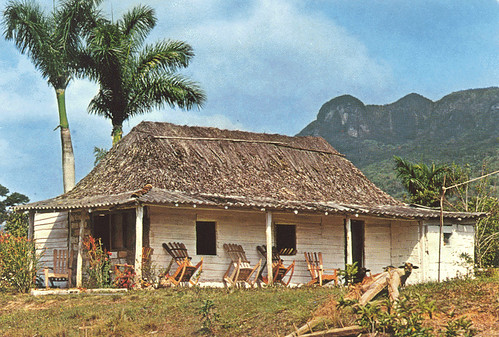
"Ven aquí a la realidad" por Ernesto Duarte Brito
Bájate de esa nube
y ven aqui a la realidad
no mires a la gente
con aire de superioridad.
Tu piensas que el dinero
todo lo puede comprar
no basta el oro del mundo
para lograr felicidad.
La vida cual mujer es veleidosa
lo que hoy te sobra
mañana a lo mejor te faltara
recuerda que del polvo hemos venido
y hacia el polvo iremos a parar.
Por eso bájate de esa nube
y ven aqui a la realidad
que con orgullo, soberbia
y vanidad no lograras felicidad
* * * * * * * *
"Come Here to Reality" by Ernesto Duarte Brito
Come down from that cloud
And come here to reality
Don't look at people
With a self-righteous aire
You think that with money
You can buy everything
There's not enough gold in the world
To obtain happiness
Life is a fickle woman
What you have today
Could be lacking tomorrow
Remember that we come from dust
And back to dust we'll stop
So come down from that cloud
And come here to reality
With pride, haughtiness
And vanity you won't find happiness
Thursday, September 28, 2006
Wednesday, May 31, 2006
What is meant by "legal" and "illegal" immigration?
According to knowledgeable experts and verbose pundits, a person that arrives in the United States without necessary documentation like an immigration visa is, by definition, here illegally.
The U.S. House of Representatives, as a body, is in favor of criminalizing the act of coming to this country without a visa, coming here illegally.
Many right-wing Americans believe that all illegal aliens, individuals coming here without appropriate documentation, should be deported.
Interestingly enough, many "Cuban"-Americans in Miami are among the most vocal supporters of the recent House measure to "get tough" on undocumented, or illegal aliens.
Very interesting indeed.
.
.
.
.

Arrived illegally (no visa)

Illegal alien

The House of Representatives is "tough" on illegal immigration

Deported.
Many "Cubans" in Miami will, naturally, insist that I am attempting to make juice with apples and not oranges (as if one or the other is not fruit). "The case of Elian and others like him is different," they bellow. Based on even the most cursory surveys of immigration policies and actions in U.S. history, they have a point.
The key to understanding what "Cubans" in Miami are trying to say regarding what is legal immigration and illegal immigration is not a question of something as silly as a visa.
No, it is much more simple than that, it is much plainer than that.
,
,
,
,
,

Legal immigrant

Illegal alien
Monday, May 15, 2006
'Tough Healthcare Situation Grows'
May 15, 2006
La Prensa de Minnesota
"La Clinica on Lake to Close"
Tough Healthcare Situation Grows for Latinos, Rest of Metro
by hassan Pérez
The North American continent is unique among similar land masses in the world for the distinction of having the smallest number ofsovereign nations relative to Africa, Asia, Europe, et cetera. Withall due respect to the proud nations of Central America and the WestIndies, North America is essentially comprised of Canada, the United States, and Mexico. Because of the size of each of the three NorthAmerican giants or perhaps in spite of their vast territories, Canada,the U.S., and Mexico are all quite different from one another in termsof social, political, economic, and cultural aspects.
Perhaps the biggest difference concerns access to healthcare. At polaropposite ends of this spectrum are Canada, with universal healthcareas guaranteed as hockey in winter, and the U.S., with private healthcare rivaling one of Jennifer Lopez' engagement rings in cost toworkers in the land of the free and the home of the brave.
No where is this "so-near-and-yet-so-far" disparity in affordable and therefore accessible healthcare more evident than here in Minnesotawhere we are closer in distance to Canada than we are to Chicago.
With the number of uninsured and underinsured people in the UnitedStates rising constantly (approximately 50 million in the U.S. with nohealth insurance at all), access to medical care that will not turn apoor working stiff away because he or she does not have a validinsurance card and/or a credit card is rare and valuable – in more ways than one would think.
In the raging sea of rising healthcare costs where a serious illnesscan capsize even an affluent family into bankruptcy, places likeMinneapolis' La Clinica on Lake Street are vital to community health. Because it refuses to turn away for financial reasons any patient inneed of medical services, however, La Clinica on Lake will cease toexist at the end of this summer.
Mavis Brehm, executive director of West Side Community Health Services, parent organization of La Clinica, informed La Prensa deMinnesota that La Clinica's Board of Directors finally decided lastweek to euthanasize the popular and respected South Minneapolisprovider "because of mounting financial pressure."
In 2005, La Clinica saw over five thousand patients (which is asignificant figure for a facility that is only open from 8 a.m. to 5p.m. on weekdays) and approximately 80% of those patients hadabsolutely no form of insurance.
While not an emergency or urgent care clinic, La Clinica does a greatdeal more than putting a band-aid on a scraped knee or wrapping atwisted ankle. Among the services offered to its patients, La Clinicaoffers primary care and preventative services, women's healthcareincluding breast and cervical cancer screenings, teen pregnancyprevention, diabetes prevention and treatment, mental health services,lab services, and more. La Clinica, along with its partners at community organizations like C.L.U.E.S (Chicanos Latinos Unidos EnServicio, an adult outpatient program which also works with victims ofsexual abuse), offers programs such as the Aquí Para Ti (Here for You)Youth Development Program which offers preventive services targetingvarious healthcare issues including but not limited to tobacco,alcohol, & drug use, immunizations, exercise and nutrition as well asfree health fairs.
The total amount budgetary shortfall for last fiscal year totaled $900,000.
According to Brehm, the transition period of the next few months forLa Clinica will focus on trying to get as many of the existing staff and services from Lake Street absorbed into WSCHS' flagship clinic inWest Saint Paul. While acknowledging that there are still someimportant funding possibilities that could have kept La Clinica openbeyond August 2006 (when its current lease expires), Brehm stated that "the long term solution" compelled the Board to consolidate WSCHS'services which were utilized by over 36,000 Minnesotans last year alone.
This latest unfortunate development is not the end of the story. It actually marks the continuation of an ongoing struggle. Closing LaClinica on Lake Street "doesn't take away the pressure in the future …the needs aren't going away," said Brehm of the reality of limited reimbursements and increasing demands on an already overwhelmed"safety net." In a stoic effort to maintain resolve, the soft-spokenhead of WSCHS expressed a hope that the closing of La Clinica on Lake will raise "awareness of how vulnerable providers are."
In fact, according to Brehm, if the 80% ratio of uninsured patientstransfers to the West Saint Paul site without appropriate andrealistic adjustments, the future of WSCHS itself will become bleak. If the future of WSCHS itself is threatened, the entire Metro Areawill feel and have to bear a heretofore unacknowledged burden ofKatrinaesque proportions.
The cost to the Twin Cities if La Clinica shuts its doors will not be so easy to measure – largely because the figures will be much, muchhigher than what it would have cost to keep it open. This has a lot todo with the fact that La Clinica is not your average everyday clinic.In addition to demonstrating that adhering to the sacred tenets of theHippocratic Oath is non-negotiable by not turning away poor patients,La Clinica, which opened its doors on September 10, 2001, is also theonly place that Minnesotans of Latino descent can go for culturally competent medical care in Minneapolis.
La Clinica's entire staff is bilingual and bicultural offering acritical form of bedside manner to Latino residents of Hennepin,Ramsey, Dakota, Anoka, Scott, Carver and fifteen other counties in the area (when La Clinica first opened, no one expected patients to travelfrom as far as Maple Grove or Brooklyn Park but "if you build it ….").Of the over five thousand patients seen at La Clinica last year, over 90% were Spanish speakers and a significant number were recentimmigrants.
Cultural compatibility is conducive and critical to clinical success.
The potential costs to local resources already under pressure from tightened budgetary strings at the local, state, and federal levelscould very well be alarming. The likelihood that a Minnesotan incrisis will go a facility that is culturally intimidating is veryslim. The social and financial ramifications here, such as the possible spread of untreated infectious diseases such as avian flu orthe mumps or a traumatized teenager shut off from his therapistreacting inappropriately to a police officer, are hard to measurebefore they happen and impossible to prevent after they have happened.
Potential costs can also skyrocket from residents no longer havingaccess to preventive wellness visits waiting until an otherwisepreventable condition deteriorates into an emergency room visit at analways-overwhelmed Hennepin County Medical Center E.R.
Of course, the aforementioned represents what could be the tip of animmense iceberg. Indeed, for example, unreported critical healthstatistics also pose grave dangers to everyone.
Current funding for La Clinica comes from a variety of sources including the West Side Community Health Services of which La Clinicais just one location and several much-needed grants. Only a third ofWSCHS's revenue comes from Medicaid, a fifth comes from federalgrants, a small percentage from patients' private health care providers – revenue from cash payments from uninsured patients areactually higher than those of patients with insurance.
Grants such as those from Eliminating Health Disparities Initiativefunds from the Minnesota Department of Health, Office of Minority and Multicultural Health and the Maternal & Child Health grant (which madeit possible for La Clinica to serve almost four hundred pregnant womenin that grant's first year) certainly help but they do not often cover medical expenses, drugs, operational expenses, labs, et cetera.
This is more than troubling for the staff at La Clinica; it isterrifying for its patients who receive treatment for rape,dehydration, stress, depression, post-traumatic stress disorder, anxiety, urinary tract infections and other serious conditions thatcannot go untreated.
In rent alone, La Clinica pays $200,000 annually for the 9,000 squarefoot facility located at a mass transit crossroads where bus lines and the Hiawatha light rail line all converge.
Like many of its patients, it certainly appears that La Clinica isalso underinsured and, unfortunately, altruism does not pay the billsin Minnesota.
When one looks at the potential catastrophic larger picture, finding a way to keep La Clinica open would have been much more cost effectivethan allowing it to close.
After all, that $900,000 shortfall last fiscal year works out to about$173 per patient seen.
Considering how much La Clinica is doing for the greater Minneapolis-Saint Paul Metro Area and beyond, that figurecomes out to a bargain relative to some of the inevitable costsdirectly and indirectly associated with allowing it to close.
Or in simpler terms, it is cheaper to buy a new battery for your smoke detector than to pay the deductible for your fire insurance after yourhouse burnt down.
This, of course, dovetails into the growing call for a more democratichealthcare system that guarantees that, as Brehm stated on a stormy afternoon last week, "all people have access to the most basic ofservices." While it a rather sad statement about a society thatpoliticizes basic human welfare, it is an undeniable reality thathealthcare is a hot button political issue during this mid-term election year. With recent news that employees of UnitedHealth Group(which is headquartered in Minnetonka) are disgusted with UnitedHealth's consumer-driven worker health plans among otherharbingers of growing consumer frustration with the increasingly apparent ineffectiveness of the American healthcare status quo, moreand more people in the U.S. are calling for a paradigm shift towardsthe Canadian and even the Cuban models.
While reactionary attempts to scare Americans away from even thinking about "socialized medicine" are intensifying, so are the realizationsthat universal public healthcare is no more ridiculous of aproposition than universal public education. The misguided rationalethat says that Americans should have to pay for the basic human rightto receive quality health care makes as much sense as reinstitutingarchaic and elitist poll taxes to make people pay for the right tovote.
If the right to an education and to vote do not require copayments and premiums, why should the right to feel better require them?
Before finishing her interview with La Prensa, Brehm stated that "weneed a system that works differently." Thinking back to New Orleans and Hurricane Katrina and thus looking at how easily a disaster canreveal a Third World reality here in this G8 country, it would behoove Minnesota's leaders (elected and non-elected) to pay heed to Ms.Brehm's statement without delay.

Monday, May 01, 2006
'Eso es Cuba y Más Nada'
“Eso es Cuba y Más Nada”
Things a “Cuban” from Miami Discovered during His First Trip to Cuba or What One Can Buy with $9 if He Spends Wisely
by Sundiata Ojeda
La Prensa de Minnesota
April 10, 2006
Things a “Cuban” from Miami Discovered during His First Trip to Cuba or What One Can Buy with $9 if He Spends Wisely
by Sundiata Ojeda
La Prensa de Minnesota
April 10, 2006
We had been sitting in the shadows of El Cristo de la Habana talking about many things on what was supposed to be my last night in Cuba. Located in Casablanca, just across the harbor from Old Havana, the enormous statue of Jesus commissioned by Mrs. Fulgencio Batista in late 1958 becomes an after-hours magnet for lovers wanting privacy that can not be had on the Cuban capital’s more famous Malecon. The passion that filled our evening, however, was not a romantic passion: Lisa and I kept coming back to Cuba. Every turn in our conversation kept coming back to our home, the only home she’d ever known and the home I was just visiting for the first time ever.
I am a Cuban, born and raised in Miami, who was making, at that time, his first visit to Cuba and I wanted to stay. I still do.
“Es muy duro,” she said of life in the last forbidden place for Yanquis to visit. “People don’t know hard it is.”
Lisa described having to scrimp and save for the most basic things that most middle-class people in the United States think absolutely nothing of, things whose existence in one’s kitchen or medicine cabinet or purse is so taken for granted in this country where our consumer driven skills at throwing away finds corporate America paying higher salaries to young scientists and engineers for developing disposable products than for developing recyclable ones.
Lisa, who works in the retail sector and whose clients are virtually all “turistas,” shares a house with her mother and her older sister, who has been a teacher for a decade now. The house they share is literally under construction and much of the family’s discretionary income goes to purchasing building supplies like sacks of cement. She expects to have the house, which they moved into because their old house in Old Havana was falling apart, ready by December.
In order to have it ready by then, her family devotes virtually of its free time to the kind of work that would make Bob Villa (whose own father left Cuba in the 1940’s to flee tyranny) either beam or cringe.
No one in Lisa’s household has any experience in construction but they do have experience in “inventando” – improvising. Lisa told me that people that come to Cuba for a few days or a few weeks or even a few months staying in nice hotels or even quaint casas particulares (the Cuban equivalent to North American bed and breakfasts) with rental cars and pocketfuls of cash that eclipse in quantity what most Cubans can earn in three or four months or five months do not know what it is to have to inventar just to make it from day to day.
According to the Central Intelligence Agency’s website, Cuba’s 2005 per capita income is $3,300 (compared to this country’s which is approaching $50,000). That works out to roughly $9 per day or what the average resident of Golden Valley or Anoka or Woodbury spends on just his or her first appetizer at Bennigan’s or Applebee’s.
A common sight in the few images we are allowed to have of Cuba in this country via either television or print media is of Cubans crowding into odd-shaped buses called camellos or camels because of their two “humps.” An even more common sight throughout all of Cuba for those that actually visit the real Cuba – city streets in El Cerro and Santo Saurez, rural roads in San Cristobal and Alto Songo – is people trying to catch a ride a la botella, or hitch-hiking. Everyone in Cuba, it appears, hitch-hikes – it is not uncommon to see to senior officers (the highest rank I noticed was that of a lieutenant colonel) in the Cuban Army trying to catch a lift.
It is important to note at this point, however, that not everything in Cuba and relating to Cuba is as it appears.
For example, seeing officers of an army that effectively represents, as historian Eduardo Galeano wrote, “a people in arms” standing alongside their neighbors and compatriots waiting for a lift seems to dispel notions held in the United States that Cuba is a militaristic dictatorship. After all, on my most fanciful days, I have had no success trying to picture even a low-ranking goon in Agusto Pinochet’s sadistic army in Chile not having his own car or at least motorcycle with which he could ride around Santiago or Valparaiso during Pinochet’s Kissinger-authorized glory days.
In other words, the important lesson to be learned here is that rhetoric of “all men are created equal” comes closer to fruition in Cuba than anywhere else I have visited in the world.
Another common misconception about Cuba is that most if not all Cubans spend every waking hour trying to escape to the United States. Of all of the people I spoke with in Cuba, only one was actually trying to get the United States. Most Cubans that expressed any opinion on the matter, in fact, communicated what amounted to a non-negotiable desire to stay at home – all while acknowledging the same realities that Lisa spoke of (Lisa, for her part, also expressed a determination not to leave Cuba).
Because of Cuba’s unprecedented commitment to free quality public education up to and including university studies (according to last year’s United Nations Human Development Report, Cuba was the world leader in terms of funds allocated to public education – 18.7% of GDP from 2000-2002 compared to the United States’ 5.7% for the same period), a visitor to the largest island in the West Indies that wants to engage in lively, informed, respectful dialogue about what is going on in the world does not have to look very far. Every Cuban I encountered – from off-duty cab drivers to waitresses, from construction workers to artists, from clerical professionals to the happily retired – was very well-informed about current events.
To whit, there is a spot out in plain view of most of the tourists in Cuba that captures perfectly this special manifestation of a very well-informed and therefore more politically sophisticated people. In Havana’s Parque Central, located in between landmarks such as the Hotel Inglaterra, the Hotel Parque Central, and El Capitolio, one can easily find La Esquina Caliente, the Hot Corner. There, under the shade of majestic banyan trees and the approving gaze of the statue of national hero José Martí (said statue made “infamous” by photographs of drunken U.S. sailors defecating on it during an all-too-common shore leave of disrespectful debauchery on Cuban soil during the neocolonial phase of Cuban history that many in Miami still think of as “the good ole days”), a large group of Cubans get together every day to talk – and talk very loudly – about everything and anything that comes to mind.
The only rule for participation in the discussions at La Esquina Caliente is that you participate in a well-informed and respectful manner (in the parlance of many communities in the Southern U.S. “don’t come in there talking mess out the side of your neck”). This is pure democracy and the wide-open nature of the discussions there would make ancient Athenians envious.
Also interesting is the fact the presence of a uniformed officer nearby did not tempt any of the Cuban Socrates or Platos to censor themselves in the least.
My first visit to La Esquina Caliente was marked by questions posed to me about U.S. Secretary of State Condoleezza Rice, filmmaker Michael Moore, the USA Patriot Act, just to name but a few of the very many topics covered by myself and the, according to eyewitness accounts, one hundred or so people that wanted to spend time talking with another Cuban, this one from the United States.
This brings me to another hidden reality about Cuba: my long-held fears about being harassed or incarcerated in Cuba because my family fled the island to come to the United States were as fictitious as claims three years ago that Iraq had stockpiled weapons of mass destruction for the specific purpose of destroying the Mall of America. There is no intelligent basis for me as a Cuban born in the United States to be any more afraid of anything in Cuba than a Cuban who has lived his entire life in Cuba. In fact, there is no intelligent basis for any American to be any more afraid of anything in Cuba than a Cuban living in Cuba. While Cubans are certainly aware of their country’s history of being on the receiving end of North American abuses (which, as historical and contemporary accounts easily demonstrate, puts them in company with many nations throughout the developing world), an American is more likely to have someone from Canada heap scorn upon them because of his or her nationality than to have a Cuban do so.
Probably the easiest thing to find in Cuba is its greatest natural resource which is the unconditional humanity which Cubans so easily and generously offer to even the most remote strangers. There is a saying in Islam that Allah gives to mankind without measure. If emulating the Almighty is salvation, then Cubans recreate Heaven every moment of the day. Instances and examples of Cubans giving a lift, lending a hand, giving a warm hug, planting big kisses on one’s cheek, extending a heartfelt greeting, offering a kind word, breaking bread, gladly giving timely advice or directions, or flashing a bright, bright smile are too numerous to share in this one article. This genuine sense of community, the community of humanity, is so deeply-ingrained in life in Cuba today and is probably the single biggest reason why the many Cubans that told me they want to stay in Cuba choose to do so.
Returning to the question of Cubans that do and do not want to leave Cuba for the United States, many Cubans know that, by virtue of an act of Congress, the U.S. has 25,000 slots for Cuban immigrants open annually. An important first step in this immigration process is to stand in line – for hours at a time – at the U.S. Interests Section in Havana. To submit an application, a Cuban must pay a non-refundable application fee of one hundred dollars to officials at the Interests Section – a considerable sum in a country where 27 Cuban pesos equals one U.S. dollar. Most applicants, by the way, are turned down flat by the U.S. government – after having paid the application fee.
When one takes this into account along with the undeniable influence of dreaming dreams based on stories from people in the United States and the images prevalent in North American movies, for example, and the natural human tendency to be convinced that the grass is always greener on the other side of the fence, is it any wonder that there are Cubans that try to come to this country? After all, most of the Cubans that left Cuba in hopes of landing at least one “dry foot” on U.S. soil interviewed and quoted for news stories in North American press cite motivations rooted in economic foundations to explain why they sought to become one of the teeming masses.
Of course, there are those – mostly in Miami and Washington and who have a lucrative vested interest in convincing us of the following – that insist that Cubans leave Cuba because they hate Fidel Castro the communist. Yet, more Mexicans opt to take the dangerous desert crossings where the climate, the topography, the flora & fauna, bandits, vigilantes, and the vastness of the American “Southwest” make survival anything but a certainty than Cubans that take the ninety mile crossing to the United States or the even shorter one to the Bahamas. Is Vicente Fox a communist? If so, does his patron in Crawford, Texas know about this?
Going past a quaint church in the town square of the picturesque town of Consolacion del Sur, Olivia, a very charming and very Catholic 20-something professional who was going back to school to learn English, proudly let me know that that church is where she was baptized and received her first communion. It was yet another reminder of Article VIII of the current Cuban constitution which guarantees religious freedom. Although I knew nothing of the existence of that particular constitutional provision until just before I left Cuba, I saw it manifest just about everywhere I ventured in Cuba almost from the first moment I arrived.
One of the biggest falsehoods concocted about Cuba in the United States I discovered was that religion and spirituality is grounds for state persecution.
In one twenty-four hour period, I participated with other Muslims in Friday prayers at a mosque just off the Plaza Mayor (one of the best outdoor book markets I’ve ever visited) in Old Havana and was present for a informal yet powerful cleansing ceremony at the home of, Gerardo, a humble Babalwo, or priest in the Afro-Cuban religion of Santeria, in the South Havana district of Parraga. None of the aforementioned was done in secrecy; in fact, on both occasions, two separate uniformed police officers helped me locate both places mentioned.
This revelation contrasted sharply with news of the “Cubans” in the United States that were exercising their freedom of religion via emails encouraging people to pray that the Cuban baseball team would lose in the World Baseball Classic.
As the spring night air grew cooler, Lisa and I talked about the universal healthcare for Cubans that I had been hearing so much about. She was due to go in the day after the following for a brief outpatient procedure at her local “policlinico” (which, like many clinics I saw, was within easy walking distance of her home). She mentioned that, although she was proud that Cuba was helping other countries with its visiting medical teams, the past three years or so had required a bit of an adjustment. When asked what sort of an adjustment, she said that now, instead of being able to walk in and see a doctor right away, walking in sometimes required waiting up to two or three hours.
I thought of telling her about what “walk-ins” usually encounter in the United States but then I thought differently. Cuba and its achievements in healthcare get a lot of attention internationally and with numbers like the following, it is not hard to wonder why:
Per Capita Spending on Health Care (2002)
ranked #1 - USA ($5,274 per person)
ranked #97 - Cuba ($236 per person)
Percentage of One-year-olds Immunized Against Measles (2003)
ranked #2(tied) - Cuba (99%)
ranked #70 - USA (93%)
(UN Human Development Report 2005)
Thus, according to the United Nations, Cuba is able to immunize more of its children than the United States which spends twenty-three times as much on health care as Cuba. Of course, anyone who has driven past any of the immense, shiny edifices that house just local offices of the HMO’s and PPO’s that, on average, are responsible for, according to the sponsors of House bill HR676, the average American family presently spending over $9,000 annually on healthcare premiums was probably already wondering where the money is really going anyway.
As we sat in the silence of the night, watching tugboats guide ships into their berths in the harbor beneath us, I thought of how much can be done with so little. After all, in a lifetime, Cuba has eradicated illiteracy (which was as high as forty percent during the “glamorous times” that are celebrated annually at Miami’s Cuba Nostalgia Convention) and has not only addressed medical care disparities within its own borders but also helped to augment medical resources in countries like Pakistan, Venezuela, Haiti, Malaysia, (68 countries in all as well as “1,800 doctors from 47 developing countries graduated [from medical school] in Cuba” in 2005 according to the BBC) all while being subjected to an economic blockade denounced as both inhumane and illegal in various circles.
I also thought of Cuba’s current per capita income, that $3,300 annually or nine bucks daily mentioned earlier. I then remembered a conference last September held in a conference room in the Humphrey Building at the University of Minnesota that talked about the billions of people on Earth having to “live” on less than two dollars a day.
According to the World Bank, 2.7 billion people are forced to try to survive on this two dollar per diem “budget.” With the current world population at just under six billion, that means that one out of every two human beings must be able to pay for food, housing, clothing on less than what the average Minnesotan has in the change container of his Ford Explorer.
I then thought about “Cubans” back home in Miami that say they want to take over Cuba again so that Cuba can catch up with the rest of the world. Looking at how Cuba’s nine bucks stacks up against “the rest of the world,” I really hope that they stay in Miami.
article in english
article in spanish
Tuesday, April 11, 2006
Why No One in Puerto Rico Seems to Like the FBI
The Smoldering, Smothered Struggles of An American Colony
Imagine, if you can, an FBI raid on a tranquil farmhouse in a picturesque rural vista where the target is an old man wanted for connection to a bank robbery that occurred almost a quarter century earlier. Imagine, if you can, that, instead of ending a long stand-off, a sniper’s bullet begins a long stand-off. Imagine, if you can, a group of journalists being attacked by draconian government shock troops in an attempt to keep said journalists from covering a jack-booted ransacking of the home of an elementary school teacher and the offices of a Presbyterian minister.
If you are having trouble imagining any of the above, don’t feel bad because it is difficult for many Americans to imagine what is not shown to us on the television or the newspapers. And, in fairness to those who are having imagination issues right now, it is not like any of the aforementioned has been shown to many of us on the television or the newspapers. Now, it is not because what has just been described has not been happening – it has; it is just that what has been described has been happening in Puerto Rico and not River Oaks or Coral Gables.
As you read this, there is a good chance that some sort of demonstration protesting the FBI’s heavy-handed and, some contend, illegal actions in different parts of Puerto Rico is going on or, at the very least, another is being planned.
Bottom line: there is a growing number of people in Puerto Rico that are pissed off about yet another manifestation of what happens to people living in one of the world’s last colonies. That’s right ladies and gentlemen – no matter how your conscious as an American citizen proud of this country’s anticolonial struggles wants to view it, Puerto Rico is a colony of the United States of America and has been since General Nelson Miles and his U.S. troops invaded Puerto Rico at the end of July, 1898 when the outcome of the Spanish-American War was already a victorious foregone conclusion for the United States.
The natural question that many are likely asking right now is “How in the name of Patrick Henry is Puerto Rico a colony of the United States?” For starters, Puerto Ricans are not allowed to participate in national elections including but not limited to voting for the President of the country whose flag flies over every public building on the island. It is interesting to note at this time that Iraqis that have been living in places like California and Michigan for the past twenty years were allowed and even encouraged by the U.S. government to vote in Iraq’s recent series of elections. Puerto Ricans are allowed to vote on the island itself but the United States Congress does not recognize the outcome of any plebiscite on the island as binding.
But, contrary to what many people concerned about the recent immigration demonstrations across the United States may erroneously believe, Puerto Ricans are U.S. citizens and, in fact, have been since the Jones Act was signed into law by President Woodrow Wilson in 1917 (just in time to allow the War Department to draft able-bodied Puerto Rican men to bolster enlistment rosters being mobilized for the blood and mud soaked trenches of Western Europe during World War I). Puerto Ricans are also U.S. citizens when it comes time to pay taxes.
In Puerto Rico, the “Americaness” of its children as determined by when it comes time to die for the United States as a member of the U.S. military is known as “the blood tax.” To whit, G.I.’s from the island of Puerto Rico suffered more casualties per capita during the Vietnam War than any mainland state.
And, with all due respect to the Founding Fathers, the principle prohibiting “taxation without representation” does not apply to Puerto Rico as, since they are not allowed to cast votes from the island for mainland elections, they do not have any elected officials representing them as participatory members of the bicameral law-making body of Washington. D.C.
Of course, all of Puerto Rico’s military sacrifices are not limited to volunteers and draftees in every North American conflict from the “war to end all wars” to the current invasion of Iraq. In many regards, Puerto Rico has been a floating U.S. military base in the Caribbean ever since those first Marines landed 108 years ago. While the notorious naval installation on the former fishing island of Vieques finally closed recently, there still remains a strong military presence on this island just slightly larger than Delaware.
*With a total population of almost four million people (about what one can find in Oklahoma or Oregon) in such a small space, Puerto Rico is a very densely populated island. Some have said that if the continental United States were to have the population density of Puerto Rico (1,100 persons per square mile), every single person on Earth would be living in the 48 contiguous states.
The cancer rates for residents of Vieques that did not have any bombs blow them to smithereens like a quarter-ton piece of live ordinance did David Sanes Rodriguez on April 19, 1999 are as high as are the incidents of horrible blood disorders. The likelihood of a fisherman catching a contaminated fish in that area is as likely as the air turning a little chilly in Minnesota during winter.
In 1998, U.S. Representative Don Young (AK – R) introduced a proposed piece of legislation heretofore known as the Young Bill that on the surface outlined possible avenues of addressing Puerto Rico’s political state of limbo. Also included in the text of the Young Bill was the stipulation that no change in Puerto Rico’s political status (continued “Free Affiliated State” or Commonwealth; 51st state; or return to independence) would result in any change in the U.S. military presence in Puerto Rico. In other words, one Chaguaramas was enough for the Pentagon; Washington is determined to have a second Guantanamo even if Puerto Rico does finally reattain independence. That, however, would run contrary to United Nations’ policies on decolonization. As Mario Murillo, a professor at Hofstra University wrote in Islands of Resistance, “all military activities by an occupying force should cease completely before any true process of self-determination can take place.”
Indeed, United Nations Resolution 1514 (XV), which was passed in December 1960, a period of accelerated decolonization, has been cited as part of the liberation struggles for the peoples of Tibet, the Malvina Islands, Palestine, Papua, et cetera.
In part, this declaration states that “the subjection of peoples to alien subjugation, domination and exploitation constitutes a denial of fundamental human rights….” This is significant when one looks at the disheartening economic conditions (in 2004, Puerto Rico’s unemployment rate was over eleven percent while the rate in the United States was under five and a half) that have long compelled so many Boriquas, as many Puerto Ricans affectionately and reverently refer to themselves, to leave their beloved Isla de Encanto, Island of Enchantment for life in the United States.
This significant fact becomes even more disheartening when one looks at the state of Puerto Rico’s economy prior to the arrival of General Miles. According to noted historian Dr. Eric E. Williams (who was also the first Prime Minister of Trinidad & Tobago), Puerto Rico thrived on “small farming and diversified economy, based on the cultivation of minor crops rather than plantation staples.”
Puerto Rico’s colonial status is also symbolized by the long history of both official and unofficial, blatant and subtle repression of its culture as symbolized by the varying yet perpetual degrees of colonial insistence on English being the exclusive language of instruction in Puerto Rican schools, in particular at high school levels and above.
Let us go back, however, to the unimaginable scenario described earlier.
The largest demonstrations occurring at San Juan’s Hiram Bithorn Stadium during last month’s World Baseball Classic were not the petty and childish antics of some elitist malcontents from Miami accosting the Cuban baseball team. Just outside of the stadium and outside of the interest of news directors was a series of strong showings by Puerto Ricans protesting the naked aggression against their people by the Federal Bureau of Investigation. Reports indicate that the gathering of protestors stretched for at least over a half mile down a major thoroughfare in the Puerto Rican capital.
These protests were a continuation of a series of public condemnations of an upsurge in sadistic tactics by FBI agents.
On September 23 of last year, the G-men, acting on a tip from a former Marine in Puerto Rico who some sources say is a police officer who was looking to cash in on a half-million dollar reward, surrounded Filiberto Ojeda Rios in his home in a rural district. A government sniper shot Ojeda and the agents thereupon forbade anyone to enter the dwelling for approximately twenty hours.
A doctor present at Ojeda’s autopsy indicates that the 72 year old Ojeda bled to death from a bullet wound to his shoulder.
The sad irony of what many in Puerto Rico continue to describe as the cold-blooded assassination of Ojeda was that it occurred on the anniversary of Puerto Rico’s Grito de Lares, or Rebel Yell of the town of Lares, when Puerto Rican patriots declared their outright independence from Spain on September 23, 1868 – over a fortnight before Cuba declared its independence from Spain. Interestingly, both Puerto Rico’s and Cuba’s days of independence differ the United States’ Fourth of July in that both the Puerto Rican and Cuban declarations were based upon and called for the immediate and unconditional abolition of slavery whereas, after drafting and signing the Declaration of Independence, Thomas Jefferson likely went back to Monticello to rape some more of his slaves.
The death of Ojeda was not only denounced by many inside and outside of Puerto Rico but it has also served to galvanize the island’s independence movement of which Ojeda was just one of many passionate advocates.
Puerto Rico’s efforts to secure its freedom and sovereignty date back, in the modern era, to the 19th century when Paris-educated doctor Ramón Emeterio Betances first clamored for the independence of Borinquen, the name Puerto Rico’s indigenous Taino people called the island and, hence, the name that Puerto Rican patriots had chosen for their country when Spain finally gave autonomy to the island in 1897 after almost thirty years of having Puerto Rican representatives serve as participatory members of Madrid’s legislative assembly, the Cortes.
At the time of the U.S. invasion, Borinquen was already issuing its own currency, postage stamps as part of its own postal service, was managing its own customs houses as per international travel and commerce, and had its own constitution. This was the basis upon which the legendary Dr. Pedro Albizu Campos, an Ivy League-trained intellectual giant, formed his argument against what he viewed quite clearly as the illegitimacy of U.S. rule over what was already a sovereign nation per international laws and precedents.
A WWI veteran who served as a doughboy in France, Albizu Campos saw no point in groveling for rights continually being denied to his country via more formal avenues. Reminiscent of Cuban patriot Antonio Maceo’s famous quote that “begging for rights is only appropriate of cowards incapable of exerting them,” Albizu Campos saw a moral and historical foundation for his eventual advocacy of armed insurrection against colonial oppression. After all, he reasoned, had not George Hewes and Leonard Pitt defied the British when they dumped £10,000 worth of tea into Boston Harbor and had not the Minutemen taken up arms against the red coats at both Concord and Lexington?
Albizu Campos’ dedication to the cause of Puerto Rican independence was uncompromising (“patriotism requires an offering and in this there is no partiality. It’s either all or nothing,” he once said). This dedication was to be tested through over a quarter of a century of incarceration in federal prisons and subsequent radiation torture while in custody in the 1950’s.
The long history of Puerto Rican independistas struggling for their country’s freedom, in fact, is being celebrated this month. April is being recognized as Puerto Rican Freedom Month in remembrance of a series of arrests in April 1980 that led to the detention of over fifteen Puerto Rican nationalists. Even after executive clemency signed by Bill Clinton in 2000, there are still some Puerto Ricans that have remained behind bars since 1980.
On February 10 of this year, just a few short months after the attack on the home of Ojeda, FBI agents and SWAT teams from Miami arriving either by convoy of SUV’s or Homeland Security helicopters swarmed down on the homes of various leaders in Puerto Rico’s independence movement – while most were at work. The FBI stated that the raids, which were conducted without giving local law enforcement or even the governor of Puerto Rico notice until after the raids had started, were part of a pre-emptive effort to attack terrorism.
Among the “terrorists” that the FBI had targeted for that day’s raids were Vilma Vélez Roldán, an elementary school teacher whose home was ransacked over the course of a four hour search, and José Morales, a Presbyterian minister whose community economic development offices had computers and files removed.
Despite the attempt to justify raids, that have been described as exercises in excessive force, as part of an anti-terrorist campaign, apparently no arrests were made in connection with the raids nor does it appear that any of the targeted individuals were prohibited from leaving the island.
Also on February 10th, after the raid on the home of Lilian Laboy, during which time neither Laboy’s daughter nor attorney were allowed inside by federal agents, members of the local press attempted to enter the residence in an attempt to “get the full story.” At that point, the reporters were attacked by pepper-spray wielding FBI personnel resulting in the hospitalization of some of the journalists.
According to accounts, the attacks were unprovoked and subsequently drew harsh denunciations by professional groups such as the Organization of Independent Journalists, the Journalists Association of Puerto Rico, the Union of Journalists, the Center for the Freedom of the Press, the Overseas Press Club, and the Association of Photojournalists.
That same afternoon, crowds flocked to San Juan’s federal courthouse (which also houses the local FBI office) in a show of outrage towards the continued abuse of power in Puerto Rico which Donna Hernandez of the Applied Research Center states has increased since the 2001 passage of the USA Patriot Acts.
“It was always bad,” says Hernandez, “but it has gotten worse.”
Additionally, to date, local officials complain about the degree to which federal officials are obstructing their own investigations into both the matter of Ojeda’s death and the events related to the February raids. This has only added to the indignation of Puerto Ricans both on and off the island.
It is also important to note at this point that these series of events that have been virtually ignored by mainstream media outlets in the United States. Conversely, these events have been reported on extensively by print and broadcast media on the island.
It is obvious that a gross injustice is taking place in Puerto Rico. The difficulty, however, is in determining which is the great injustice: that Puerto Rico is a colony with no apparent future of peaceful transition to dignified sovereignty or that no one in the United States seems to care.
Friday, February 17, 2006
El Doce: Remembering Cuba's Hidden Genocide
Six years ago, I first attempted to bring to the web a story known by some, unknown to more, ignored by many, and hidden by too many: El Doce.
El Doce is the tragic story of the racist massacre that killed thousands of Black Cubans across the entire country of Cuba in late spring and early summer of 1912.
My initial attempt to play a part in bringing to light yet another example of vicious genocide was on meacfans.com in May 2000. Two years (and many Black History Month emails later), I was
fortunate enough to have The Miami Times agree to publish the story in a three part series that was very well-received by people in Miami eager to get another side of the Cuban story.
The overwhelming majority of the material I have referenced during my research comes from two very good books that I encourage readers to look into when some allows for some deep and
informative historical reading.
The first book is Our Rightful Share: the AfroCuban Struggle for Equality, 1886 - 1912 by Aline Helg who was a professor at the University of Texas and now resides in Switzerland. This
book was highly recommended to me by my dear friend, Dr. Alberto Jones, and I can see why. It was not easy finding Our Rightful Share but, once I did locate it, it was well worth the efforts. This book is well-written and extremely illuminating.
The other book is El Negro en Cuba (or The Black Man in Cuba) by Tomás Fernández Robaina. Please note that the only copy of this book that I have been able to find is in Spanish.
I was also very blessed to have discovered during my research a wonderful website that I still refer to frequently: afrocubaweb.com. This extraordinary website has been invaluable as it has rare photographs related to El Doce - including most of the images contained on this page - as well as information about a film made by Cuban film maker Gloria Rolando about this massacre, Raices de Mi Corazon (Roots of My Heart).
I used a third book - a doctoral dissertation found in an obscure corner of the University of Miami's library but only sparingly.
Please note that what follows is not meant to be a formal academic discourse hence I beg the pardon of my friends in academia who may bristle at the lack of a formal methodology in this essay.

Almost from the outset, AfroCubans realized that many whites were intent on taking all of the spoils that so many Black Cubans had fought so valiantly for during the War of Independence.
Basically, three things kept AfroCubans - many of whom were veterans of the War of Independence) oppressed and frustrated:

With regards to the vote that Black men had in Cuba, it was not long before they realized what still so many African-Americans in the United States have yet to realize: the "big" political parties are not going to truly look out for the best interest of both Black and white party members.

Thus, on 7 August, 1908, Evaristo Estenoz and Gregorio Surín started El Partido Independiente de Color (P.I.C. or the Independent Party of Color). Remember that, at this time, the NAACP had not even been started in the United States.

The PIC was the first all-Black political party in this hemisphere.
The PIC's platform was simple and straightforward:
This basically, was the first time anything like this was seriousl proposed since Haiti. This is important to note because the "spectre" of Haiti loomed ominously over Spanish and Cuban whites for a century and most of their policies towards Cuba's Blacks were reflective of it.
The immediate reaction of whites was to denounce the PIC as being racist. Yet, they failed to realize (or acknowledge) that the PIC was borne not out of AfroCuban racism but as a direct result of white Cubans ignoring the ideals of Cuban racial harmony stressed by many and perhaps most famously by José Martí.
The PIC was formed during the second U.S. occupation of Cuba (the American provisional governor at the time of the second occupation was then-Secretary of War and future President William Taft). The following year Martin Morúa Delgado, a conservative Cuban of color, is elected Speaker in Cuba's Senate. The year after that, Morúa introduces legislation that becomes known as the Morúa Amendment and it outlaws the PIC because is based on race and, according to the bill's supporters, racism did not exist in Cuba anymore.
Interesting to note that, just before the vote was taken to enact this bill into law, Estenoz and other PIC leaders were imprisoned and were kept in jail until after the law was passed.

By spring of 1912, the inevitable decision to protest this repression had arrived.
On 20 May, 1912, PIC party members - many of whom were veterans of the War of Independence - assembled in protest in Oriente Province. A statement was made via an interview the following day that the movement was not racist - it sought only to redress the grievances of PIC.
American government officials, upon hearing of the protest, sent 700 servicemen and 2 warships from Philadelphia on 23 May.

Also on that day, a Cuban government official sent off a telegraph to The New York Times stating the majority of the Cuban people were on the side of the government. Debate on the "insurrection" began in the Cuban House of Representatives and a Spaniard was captured by government forces claiming that he was forcibly conscripted by the "rebels of the PIC."
The Cuban Legation in Washington, D.C. received an urgent telegraph stating that the government is in complete control of the situation.
Volunteers to help existing Cuban government forces fight against PIC came forward en masse.
The Government declared its intention not to negotiate with PIC. The Cabinet authorized the use of whatever recourse is necessary to crush the "rebellion. " On 25 May, Cuban coast guard boat El Hatuey was sent to Oriente Province with a caché of arms and other war materiel.
The Cuban government was then informed that Washington had ordered two battleships in the area to rendezevous at Key West for the possibility of engagement. The following day, Cuban President José Miguel Goméz cabled Washington asking them to please refrain from intervening for the sake of Cuba's natural sovereign rights.
On 27 May, Cuban Army General Monteagudo was dispatched to Oriente.
U.S. President Taft replied to Goméz by stating that he understood concerns for Cuban sovereignty and then proceeded to explain the rationale behind the movement of American military forces.
A newspaper in London stated that the British opinion of the events was that the U.S. would annex Cuba outright.
On 5 June, constitutional guarantees were suspended in Oriente as martial law was declared. A war credit of a million pesos was granted to the Cuban army and 450 American servicemen arrived in Cuba. A day later, Goméz called for a national struggle against "rebels."
The following is taken from Aline Helg's Our Rightful Share:

The racialization of the independiente movement and the ensuing mobilization of whites against Blacks rendered the Cuban myth of racial equality ideologically useless.
[One Cuban newspaper] advocated that Cuba should emulate the United States in matter of race relations. In that country, an editorialist noted, there were ten million Blacks, but they did not rebel. Why? Because U.S. whites, unlike Cuban whites, mistreated Blacks: they burned them alive, they lynched them, they kept them completely segregated, and they did not let them vote. He concluded: "Objective lessons are terrible: Dominated races do submit."
[Prior to May 1912] whites were ready to interpret any movement of Blacks as an uprising.
Local rumors...were propogated at the national level by mainstream newspapers, which gave the impression that the supposed race war raged not only in Oriente but everywhere on the island. Fears rose nationwide. In the province of Havana, though no protest group had been observed, the alarm ran high. Black seasonal workers journeying home at the end of the zafra [sugar cane harvest] were the subjects of numerous rumors about attempted Black uprisings.


 In all likelihood, Estonez and Ivonnet never expected the racist outcry that followed the launching for their armed protest. Several sources even indicate that the independientes had made an argreement with President Gómez.
The deal that appears to have been was that the PIC would protest, Gómez would use the "threat" for leverage to compel Congress to repeal the Morúa amendment and he would get credit for "saving the day." In turn, the PIC would support the president and his candidates in November. This was not a big secret to the point where even the French ambassador was aware of it and the British consulate in Santiago had noticed that, as some independientes were being arrested, the leaders of the PIC, Estonez and Ivonnet, walked about undisturbed by authorities without having to "hide."
However, it appears that the president was selling worthless tickets of deceit to PIC as evidenced by the following from Our Rightful Share:
El Doce is the tragic story of the racist massacre that killed thousands of Black Cubans across the entire country of Cuba in late spring and early summer of 1912.
My initial attempt to play a part in bringing to light yet another example of vicious genocide was on meacfans.com in May 2000. Two years (and many Black History Month emails later), I was
fortunate enough to have The Miami Times agree to publish the story in a three part series that was very well-received by people in Miami eager to get another side of the Cuban story.
The overwhelming majority of the material I have referenced during my research comes from two very good books that I encourage readers to look into when some allows for some deep and
informative historical reading.
The first book is Our Rightful Share: the AfroCuban Struggle for Equality, 1886 - 1912 by Aline Helg who was a professor at the University of Texas and now resides in Switzerland. This
book was highly recommended to me by my dear friend, Dr. Alberto Jones, and I can see why. It was not easy finding Our Rightful Share but, once I did locate it, it was well worth the efforts. This book is well-written and extremely illuminating.
The other book is El Negro en Cuba (or The Black Man in Cuba) by Tomás Fernández Robaina. Please note that the only copy of this book that I have been able to find is in Spanish.
I was also very blessed to have discovered during my research a wonderful website that I still refer to frequently: afrocubaweb.com. This extraordinary website has been invaluable as it has rare photographs related to El Doce - including most of the images contained on this page - as well as information about a film made by Cuban film maker Gloria Rolando about this massacre, Raices de Mi Corazon (Roots of My Heart).
I used a third book - a doctoral dissertation found in an obscure corner of the University of Miami's library but only sparingly.
Please note that what follows is not meant to be a formal academic discourse hence I beg the pardon of my friends in academia who may bristle at the lack of a formal methodology in this essay.
The Republic of Cuba was "born" on 20 May, 1902 but only after Cuba's "leaders" agreed to make its sovereignty conditional to the impermanent approval of the United States government.
October, 1868 set into motion what became the definitive and defiant anomaly of the Victorian Age. While Europe and the United States were putting the macabre and sadistic tenets of social Darwinism (the "scientific paradigm" that was in vogue at that time among learned and civilized men of culture - read that to mean white men – which spoke so self-righteously of superior races and inferior races designed to justify modern colonialism) into brutal and avaricious practice in Africa and Asia andwestern North America, Cuban revolutionaries set out to drive Spain (the originator of the various modus operandi of modern colonialism) into the Caribbean Sea.Many AfroCubans fought valiently for the cause of Cuban Independence from Spain. When I write that "many AfroCubans" rushed to join the ranks of the Cuban Liberation Army (in numbers that were - in many instances - much larger in proportion than white Cubans), I mean that women and children often fought too.
There were no more master and slave - only citizens. To be racist was to be unpatriotic - a traitor to the homeland. Black, white, Cantonese, and mixed-race Cubans rose in righteous rebellion against the Spanish crown and all of the oppressive and dysfunctional institutions it so callously imposed upon Cuba. As was said during the thirty-year struggle for independence, the blood of both white and black patriots spilled on the field of battle fighting for Cuba intermingled to fertilize the soil of freedom.
To have a revolutionary ideology (that at times manifested itself almost as a radical theology) which not only spoke and wrote of the brotherhood of all humans but also acted upon it (over 70% of the officer corps of the Army of Independence was "of color") was something that ran in the face of all that was reassuring to Euro-centric concentrations of political, economic, social, and military power. url link

Almost from the outset, AfroCubans realized that many whites were intent on taking all of the spoils that so many Black Cubans had fought so valiantly for during the War of Independence.
Basically, three things kept AfroCubans - many of whom were veterans of the War of Independence) oppressed and frustrated:
- racist, Jim Crow policies advocated and encouraged by the United States while the U.S. was occupying Cuba
- racist and corrupt white Cubans that were in positions of power at virtually every level of government and business
- Spanish and other European immigrants that were encouraged to settle in Cuba as per attempts to "bleach" the island.
Banderas
With regards to the vote that Black men had in Cuba, it was not long before they realized what still so many African-Americans in the United States have yet to realize: the "big" political parties are not going to truly look out for the best interest of both Black and white party members.
Thus, on 7 August, 1908, Evaristo Estenoz and Gregorio Surín started El Partido Independiente de Color (P.I.C. or the Independent Party of Color). Remember that, at this time, the NAACP had not even been started in the United States.
The PIC was the first all-Black political party in this hemisphere.
The PIC's platform was simple and straightforward:
- allow for better job opportunities for Black Cubans
- end to the ban on Black immigrants
- serve as a unified voice for Black Cubans.
"I am a black dot, one out of the anonymous mass of my race, who longs for the claim of my people through our own effort, through the compact union and solidarity of our family."
At the time, AfroCubans comprised about a third of the Cuban population at the time (this was due to disportionate casualty rates for Black during the War of Independence and the aggressive importation of white immigrants from Europe). However, if whites were split between the liberal and conservative parties modeled on the United States' two party system and Black Cubans, who were viewed as a wing vote to patronize during campaigns, were to vote as a bloc the political power of Blacks in Cuba would likely be a major force in elections and policy-making.- a letter to Previsión, the main publication the PIC (from Our Rightful Share)
This basically, was the first time anything like this was seriousl proposed since Haiti. This is important to note because the "spectre" of Haiti loomed ominously over Spanish and Cuban whites for a century and most of their policies towards Cuba's Blacks were reflective of it.
The immediate reaction of whites was to denounce the PIC as being racist. Yet, they failed to realize (or acknowledge) that the PIC was borne not out of AfroCuban racism but as a direct result of white Cubans ignoring the ideals of Cuban racial harmony stressed by many and perhaps most famously by José Martí.
The PIC was formed during the second U.S. occupation of Cuba (the American provisional governor at the time of the second occupation was then-Secretary of War and future President William Taft). The following year Martin Morúa Delgado, a conservative Cuban of color, is elected Speaker in Cuba's Senate. The year after that, Morúa introduces legislation that becomes known as the Morúa Amendment and it outlaws the PIC because is based on race and, according to the bill's supporters, racism did not exist in Cuba anymore.
Interesting to note that, just before the vote was taken to enact this bill into law, Estenoz and other PIC leaders were imprisoned and were kept in jail until after the law was passed.
Estonez
Shortly after Estenoz was jailed, Morúa himself died. He was given a full state honors, no doubt to demonstrate to Black Cubans the benefits of supporting the status quo versus trying to rehabilitate it.A continuation and escalation of repression of Blacks that began during the first administration of Cuba's first president, Tomás Estrada Palma was one reaction to the formation of the PIC. Among the tactics employed was ignoring the blatant portrayal of AfroCubans in negative lights in the Cuban press as well as attempts to stamp out any evidence of African culture and heritage including trying to do away with the Abakúa brotherhood. This was done in much the same fashion by which Spain outlawed Freemasonry in Cuba in 1895 (many respected leaders in the Independence movement such as Antonio Maceo and Martí were Masons)."Everybody has seen the succes achieved by our party [the PIC] in all the republic and [our] last brilliant tour of Oriente, and everybody could evaluate the electoral victory awaiting us. In order to oppose it, they have resorted to the bad means of depicting us as 'cannibals of whites'."- Evaristo Estenoz, "La Discusión" (from Our Rightful Share)
By spring of 1912, the inevitable decision to protest this repression had arrived.
On 20 May, 1912, PIC party members - many of whom were veterans of the War of Independence - assembled in protest in Oriente Province. A statement was made via an interview the following day that the movement was not racist - it sought only to redress the grievances of PIC.
American government officials, upon hearing of the protest, sent 700 servicemen and 2 warships from Philadelphia on 23 May.
Also on that day, a Cuban government official sent off a telegraph to The New York Times stating the majority of the Cuban people were on the side of the government. Debate on the "insurrection" began in the Cuban House of Representatives and a Spaniard was captured by government forces claiming that he was forcibly conscripted by the "rebels of the PIC."
The Cuban Legation in Washington, D.C. received an urgent telegraph stating that the government is in complete control of the situation.
Volunteers to help existing Cuban government forces fight against PIC came forward en masse.
The Government declared its intention not to negotiate with PIC. The Cabinet authorized the use of whatever recourse is necessary to crush the "rebellion. " On 25 May, Cuban coast guard boat El Hatuey was sent to Oriente Province with a caché of arms and other war materiel.
The Cuban government was then informed that Washington had ordered two battleships in the area to rendezevous at Key West for the possibility of engagement. The following day, Cuban President José Miguel Goméz cabled Washington asking them to please refrain from intervening for the sake of Cuba's natural sovereign rights.
On 27 May, Cuban Army General Monteagudo was dispatched to Oriente.
U.S. President Taft replied to Goméz by stating that he understood concerns for Cuban sovereignty and then proceeded to explain the rationale behind the movement of American military forces.
A newspaper in London stated that the British opinion of the events was that the U.S. would annex Cuba outright.
On 5 June, constitutional guarantees were suspended in Oriente as martial law was declared. A war credit of a million pesos was granted to the Cuban army and 450 American servicemen arrived in Cuba. A day later, Goméz called for a national struggle against "rebels."
The following is taken from Aline Helg's Our Rightful Share:
By May 1912, there was still no sign that the independientes would be allowed to participate in the November elections.Moreover, newspapers claimed that the real leader of the movement was not Estenoz or Ivonnet but, rather, Eugenio Lacoste, "the Wizard of Guantánamo." The son of a Haitian immigrant, light-skinned, and educated in oriental French schools, Lacoste had been struck down by paralysis at the age of twenty-one and since then had been confined to a wheel chair. In 1912, he was a fifty-one year old coffee grower and the head of the PIC in Guantánamo; he was rumored to dominate his "fanatical" followers by spritualism and brujería [witchcraft]. This explanation allowed commentators to enhance the image of the Black brujo with that of the Haitian voodoo priest [bokor].
By showing their willingness to resort to armed protest, [so as to compel the Cuban congress to repeal the "Morua Amendment" outlawing PIC] however, the independientes prompted an outbrust of racism that swept the entire country. Although the independientes actually demonstrated only in Oriente, white repression was nationwide, indiscriminate, and unopposed.
..the government rallied immediate cross-party support for a policy of merciless repression; throughout the island, thousands of whites organized themselves into local "self-defense" militias and volunteered to go fight in Oriente.
The US government dispatched Marines to protect US lives and properties.
In the face of President Gómez' inflexibility and the army's increasing antiblack violence, on 31 May and 1 June the independientes performed limited sabotage and burned some buildings. Instantly magnified, this act provoked a new escalation of repression of AfroCubans in the provinces of Havana, Santa Clara, and elsewhere. Moreover, it justified the suspension of constitutional guarantees on 5 June in Oriente, where the bloodiest violence took place.
Thousands of AfroCubans, including Evaristo Estenoz, Pedro Ivonnet, and hundreds of other independientes, were killed by the Cuban army and voluntarios. This massacre achieved what Morúa's amendment and the trial against the party in 1910 had been unable to do: it put a definitive end to the Partido Independiente de Color and made it clear to all AfroCubans that any further attempt to challenge the social order would be crushed with bloodshed.
Journalists had a predilection for reporting false rumors of rapes of white women. In a population in which the ideals of virginity and pureza de sangre ["pure blood"] still ran high and in which white men continued to outnumber white women, the image of Blacks raping white women fit in with the overall representation of race war. The idea had been so deeply rooted in white Cuban culture since the time of slavery that it did not need the support of evidence.
"The Uprising of the Black IndependentsAlarms and Rumors Everywhere - The Official Version"

The racialization of the independiente movement and the ensuing mobilization of whites against Blacks rendered the Cuban myth of racial equality ideologically useless.
[One Cuban newspaper] advocated that Cuba should emulate the United States in matter of race relations. In that country, an editorialist noted, there were ten million Blacks, but they did not rebel. Why? Because U.S. whites, unlike Cuban whites, mistreated Blacks: they burned them alive, they lynched them, they kept them completely segregated, and they did not let them vote. He concluded: "Objective lessons are terrible: Dominated races do submit."
[Prior to May 1912] whites were ready to interpret any movement of Blacks as an uprising.
Local rumors...were propogated at the national level by mainstream newspapers, which gave the impression that the supposed race war raged not only in Oriente but everywhere on the island. Fears rose nationwide. In the province of Havana, though no protest group had been observed, the alarm ran high. Black seasonal workers journeying home at the end of the zafra [sugar cane harvest] were the subjects of numerous rumors about attempted Black uprisings.
The independiente leaders were well informed about the chasm between newspaper descriptions of the alleged race war and the reality of thier armed protest. On several occasions, the formally denied to Cuban journalists and to U.S. officials that they had launched a war against whites: their aim was simply to obtain a repeal of Morúa's amendment, Estenoz and Ivonnet declared to El Cubano Libre's correspondent. In addition, they asserted that their followers would not commit rapes, and that if rapes did take place, the culprits would be executed.
The orgy of murder that ensued was unilateral.
...Repression preceded Independiente actions.
Frustrated at not having the chance to fight rebels ["rebels" refers to independientes who did not surrender to the army - Ivonnet did and he was shot in the back, "trying to escape"], Cuban officers began to attack peaceful peasants [guajiros] indiscriminately in order to show military activity. One particularly bloody incident was the artillery campaign that Gen. Carlos Mendieta conducted in the area of La Maya. On 31 May, Mendieta invited journalists to witness the efficiency of the army's new machine guns against an alleged encampment of rebels in Hatillo. His forces then simulated a battle. As a result, 150 peaceful AfroCuban peasants, among them women and children, were killed or wounded. Entire families were machine-gunned in their bohíos. According to one witness, the cries of the wounded resonated in the distance, and for days vultures circled over the area, attracted by the corpses.
...Whites were permitted to carry arms without license.
Government forces suspected the entire AfroCuban population of collaborating with the rebels. Blacks and mulattoes found in the fields were considered rebels, unarmed peasants were believed to have hidden their guns, and all were treated without mercy. Military rule facilitated both arrests withouth evidence and executions for alleged attempts to escape. The requirement that individuals have military passes to enter and leave cities considerably restrained AfroCubans' movements: "No suspects or culprits are able to ask for passes," one journalist reported, "because they are well aware that such boldness would surely cost them their lives...."
Mass killings multiplied after the suspension of the constitutional guarantees. The bodies of hanged men began to appear in close proximity to towns....
By 10 June, it was public knowledge that those shot or hanged were seldom rebels. According to the U.S. Consul in Santiago de Cuba, "many innocent and defenseless Negroe in the country are being butchered." Bohíos were set on fire, and peasant families trying to run away were hunted down and shot. Alleged rebels who surrendered or were taken prisoner were often killed, and their bodies were often multilated.
The British consulate at Santiago reported that whites would come into town with a packet of Negroes' ears cut off prisoners who had been shot.
...Commander of the Cuban Army General Monteagudo carried out such "carnage in the hills" that "it was impossible to estimate the number of dead."
Estonez was shot at point-blank range, together with fifty men.... His body, covered with flies, was displayed in Santiago de Cuba before being buried in a common grave....
...The exact balance of the racist massacre of 1912 will never be known. Official Cuban sources put the number of dead rebels [no mention of innocent "civilians" murdered] at more than 2,000. U.S. citizens living in Oriente estimated it at 5,000 to 6,000. Guillermo Lara, an indepiente fighting with Estonez, spoke of 5,000 dead. In contrast, the official figure for the total dead in the armed forces was sixteen, including eight AfroCubans murdered by their white mates and some men shot by friendly fire.
The deal that appears to have been was that the PIC would protest, Gómez would use the "threat" for leverage to compel Congress to repeal the Morúa amendment and he would get credit for "saving the day." In turn, the PIC would support the president and his candidates in November. This was not a big secret to the point where even the French ambassador was aware of it and the British consulate in Santiago had noticed that, as some independientes were being arrested, the leaders of the PIC, Estonez and Ivonnet, walked about undisturbed by authorities without having to "hide."
However, it appears that the president was selling worthless tickets of deceit to PIC as evidenced by the following from Our Rightful Share:
Mainstream white Cuban reaction to the 1910 ... repression of the PIC ... had shown [that Gómez had more to gain from just the opposite of what he promised to the PIC].Since I first attempted to tell this story in 2000 it has become known to some as the "Cuban Rosewood." Because the telling of this story involved forces much more complex and deep-seeded than what one would expect, there is no way that this journal entry could ever fully tell the story. If anything, it is my sincere hope that this will motivate the reader to seek out additional truthes not only about this tragedy (I strongly recommend purchasing copies of Ms. Helg's important historical testimony, Our Rightful Share) but also other tragic stories such as Tulsa and its Black Wall Street, Rwanda, Armenians in the Ottoman Empire, the eviction and liquidation of the indigenous peoples of the Americas, and so many others (if you dont know about Ida B. Wells, do learn about her - soon!).
On this basis, a more Machiavellian version of the thesis of an independiente agreement with Gómez cannot be excluded: that President Gómez hoped to be reelected in November 1912 not through independientes' support but through a broad white support - transcending party allegiance - gained in the
military repression of an independiente armed protest he himself would've induced.
The presence of a Black dot on the psuedowhiteness of our sociopolitical floor was cleverly used to delude the Black masses into believing that they were respected and taken into account.-Alberto Arredondo, El Negro en Cuba
* * * * * * * * *
**Other helpful sources:- La Jiribilla
- Cuban history website
- Diaspora Studies at NWU
- Insurgent Cuba: Race, Nation, & Revolution, 1868 - 1898 por Ada Ferrer
Tuesday, January 24, 2006
50 años: ¡Felicidades a el PNM!
January 24, 2006 marks the fiftieth anniversary of the founding of Trinidad & Tobago’s People’s National Movement in Port of Spain’s legendary “University of Woodford Square.” In keeping with its populist roots and foci, the PNM was born literally in the company of thousands of people in the heart of T&T’s capital.
From its very inception, indeed its very conception was the result of a strong desire, an unrealized potential for the people of Trinidad & Tobago, indeed the entire Caribbean Basin to assert its dignified position among other nations in the world community. Standing in the way was the de jure imperial interests of the British Crown and the de facto “Open Door” empire of the United States. For a nation as tiny as Trinidad & Tobago to separate itself from such powerful forces would require skill, tact, and grace if it wanted to be able to live to tell about it.
Best symbolized perhaps by the assertive yet peaceful expulsion of the U.S. military base at Chaguaramas, the PNM did just that.
It is the opinion of this writer, given the significance of last week's King Holiday in this country, that another model of nonviolent revolution is very important to share with the world.
Thus, this brief essay will focus on an individual whose energies, experiences, training, passion, devotion, & beliefs effectively wrought a program in the PNM’s platform and policies that was and can be a model of freedom and dignity for not only the entire Caribbean basin but also the global community: Dr. Eric Williams, author, historian, West Indian Nationalist and first Prime Minister of Trinidad & Tobago.
My preliminary notes for this preliminary introduction of information and insight were gleaned from Eric Williams Speaks, a collection of speeches and essays edited by Wellesley College’s Dr. Selwyn Cudjoe as well as information provided by Erica Williams-Connell.
Professor Cudjoe calls Williams “the people’s champion” speaking for the people in such a way that made them really feel that when Williams defiantly and rightfully asserted his dignity, they did too. A devoted family man who regarded his spirituality as a sacredly private matter, of the utmost importance to this former professor of history at historic Howard University was “the principle of intellectual freedom [and] the cause of the West Indian people.”
A veritable academic prodigy, Williams could have very easily maintained the professional and social comfort made available to someone of his talents. His doctoral dissertation is better known today by the title under which one can find it in any book store anywhere in the world: Capitalism & Slavery. But he was not interested in academic accolades devoid of actual social activism.
At the height of his career in the United States, Eric Williams returned to his native land to effect a change to benefit every ‘Trini.”
“I was born here and here I stay, with the people,” said Williams upon his return to the West Indies.
“Massa Day Done connotes a political awakening and a social revolution”
“Massa Day Done,” a speech delivered in the waning days of the elitist-undermined West Indian Federation was and remains an electric exposure of and calculated caution against the “unholy alliance of egregious individualists.” The tone of this legendary speech, indeed of the PNM’s mission-once-called-‘impossible,’ is laid out from the outset. When Williams attacks the would-be enemies, indeed the Massas themselves, who perpetually seek to sow the seeds of division via unfounded and malicious accusations of “racial antagonism,” he emphasizes the obvious: “Massa is not a racial term. Massa is the symbol of a bygone era.”
The common theme found in all of Williams’ many works was “national independence and community dignity.”
Historian, writer, and Pan-Africanist C. L. R. James described Williams as “an intellectual with an abiding faith in the power of the intellect.” James also spoke of Williams’ “faith in the masses of the people.”
In his Chaguaramas Declaration of 1970, in which Williams reflected upon Trinidad & Tobago’s growth and progress since January 24, 1956 and also rallied the nation for the emerging era, he pointed out that “unless rulers have confidence in the people their rule will be highly authoritarian and they will never feel secure or legitimate in their power.”
In that Chaguaramas Declaration, Williams also addressed several other key issues, which his daughter Erica Williams-Connell spoke of during a speech in December, 1991: “immediate self-government, the political education of the people, and … ‘the elimination of racial and other forms of discrimination from our society and promotion of interracial solidarity, inviting all sections of the community … to work for the commonwealth.”
At another moment, in a statement reminiscent of some of the greater works of Martin Luther King himself, Williams said “you shall know them not by their color or their race, but by their fruit.”
For Williams, economic and social justice were inseparable items that remain at the forefront of the truest of PNM ideals. “The intention is to pass on the wealth [to] the population where it rightly belongs,” Williams-Connell said once during a speech in Port of Spain.
If this sounds like a reference to Hugo Chávez, it is merely the joyful feeling associated with historical coincidence and inevitable affirmation because Ms. Williams-Connell made this speech in 1990 when, in the oil-producing state of Alaska, “every man, woman and child received US $952 of its oil dividends.”
If the above makes sense to the reader as just, doable, and therefore necessary, then it would appear that – indeed – Massa Day is Done.
Subscribe to:
Posts (Atom)